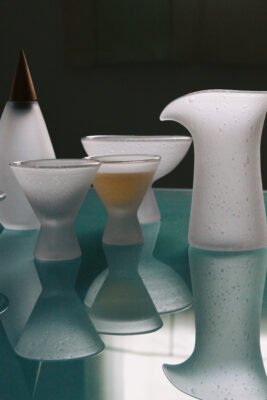




Everyday Rituals: Creating a Place to Return To
A conversation with photographer and tea enthusiast
Matthew Ritson on tea,craftsmanship, and the quiet rituals that shape everyday life.
At ONE OF A KIND EDITION, we often speak about the beauty of everyday rituals.
Not the grand occasions, but the quiet moments that shape the rhythm of our days. Preparing tea before work. Pausing in the afternoon. Returning to a familiar cup after a long day. These small rituals offer space to slow down, reconnect, and notice the beauty that often goes unseen.
For photographer and tea enthusiast Matthew Ritson (@_tealight), tea has become exactly that—a grounding ritual and a daily point of return.
We spoke with Matt about craftsmanship, memory, and why thoughtfully made objects can transform even the simplest moments.

Portrait of photographer and tea enthusiast Matthew Ritson
How did tea become part of your daily ritual?
“I was introduced to tea by my brother while he was working at a Chinese tea shop. One day he offered me a puerh tea which I gladly drank. The sweet flavour unlocked some deep, forgotten childhood memories, and from that point I was hooked.
It’s become a very grounding point in my daily routine and something I can return to throughout the day.”
There is something quietly powerful about the way taste and scent can transport us. Rituals often begin with a single moment, but through repetition they become anchors in our lives.
What role do handmade teaware and crafted objects play in your practice?
“I love beautiful objects. I truly believe every object has a soul, and handmade, well-designed pieces carry that soul on their surface.
I have so many pieces of teaware now, and each one holds a story or a memory. I also like showing people who are new to tea that it doesn’t have to be traditional or intimidating—you can discover your own personal style in how you prepare and share it.”
Crafted objects become companions over time. The more we use them, the more they gather stories alongside us.
You’ve been using Multeo’s handcrafted teaware. What struck you most?
“As soon as I unboxed it, I felt an instant and unusual connection.
I grew up spending holidays in a small village called Biot in the south of France, famous for its glassblowing. Multeo’s pieces immediately felt familiar and nostalgic.
Pouring tea into one of the cups for the first time was mesmerising. I sat looking at it for at least ten minutes before taking a sip. It’s truly a piece of art, and incredibly satisfying to use.”
Objects often carry us somewhere beyond the present moment. Sometimes they remind us of a place, sometimes of a feeling. The best handmade pieces become bridges between memory and everyday life.
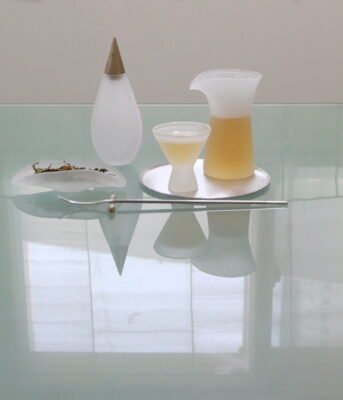
Handcrafted glass teaware by Multeo
Does craftsmanship change the way we connect with an object?
“I like the idea that someone has spent years perfecting their craft, and that dedication ultimately shapes the experience for the person using it.
When something is beautifully made, you’re naturally drawn to use it—to understand how it feels, to appreciate why it was made that way.
In a world of mass-produced products, owning something handmade feels like receiving a gift. It’s something to cherish.”
The value of craftsmanship isn’t only found in how an object looks, but in the care, time and knowledge held within it. Every mark left by the maker becomes part of the experience.
What advice would you give someone wanting to create a more intentional tea ritual?
“I’d recommend creating a small tea table, or even a dedicated corner on your kitchen counter, and filling it with objects that you genuinely want to use.
Choose pieces that resonate with you—or even better, pieces you want to share with others.
Now that so much of our lives are spent looking at screens, it’s important to create a meaningful place you can return to—a quiet point away from the noise.”
Perhaps that is what ritual offers us most: not another task to complete, but a place to return to.
A favourite cup. A familiar movement. A moment of stillness.
Sometimes that’s all we need.
Interview by Soomin Go | Photography by Sibaek Lee & India Hobson